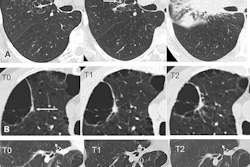
CT scans performed more than five years after lung cancer diagnosis significantly reduce all-cause mortality in long-term survivors, according to a JAMA Oncology study of over 55,000 patients, with benefits particularly pronounced in older adults, women, and never smokers.
- CT surveillance beyond 5 years after lung cancer diagnosis was associated with a 34% lower all-cause mortality rate (2.62% versus 4.33% per year)
- Patients receiving CT scans had 46% higher likelihood of surgical resection when lung cancer events were detected
- Benefits were most pronounced in older adults, females, and never smokers, suggesting risk-adapted surveillance strategies may be needed
- Current guidelines recommend periodic chest CT after treatment but do not specify how long surveillance should continue or when it can be safely stopped
- Study analyzed 55,694 lung cancer survivors from Korean National Health Insurance Service data, diagnosed between 2006-2019
CT scans performed more than five years after a lung cancer diagnosis reduce all-cause mortality among long-term survivors, according to a study published November 19 in JAMA Oncology.
A group from Samsung Medical Center in Seoul, South Korea, evaluated CT surveillance in patients who survived at least five years after lung cancer diagnosis, with findings suggesting continued scanning is associated with improved survival, noted lead authors Dong Woog Yoon, MD, PhD, and Danbee Kang, PhD, and colleagues.
"CT receipt beyond 5 years after diagnosis was associated with increased [lung cancer] detection, greater use of surgical resection after [lung cancer] detection, and a lower all-cause mortality rate," the researchers noted. " These associations were particularly pronounced among older adults, females, and never smokers."
Current guidelines recommend periodic chest CT after lung cancer treatment but do not specify how long surveillance should be continued or when it can be safely discontinued, the group explained. Long-term survivors remain at risk of lung cancer events (LCEs), including late recurrence and second primary lung cancer, beyond the five-year mark, yet evidence supporting extended surveillance is limited, they added.
To bridge the gap, the researchers analyzed Korean National Health Insurance Service data on 55,694 lung cancer survivors diagnosed between 2006 to 2019. During a median follow-up of 2.74 (1.16-5.18) years, CT receipt was associated with a higher incidence of LCEs (2.49% versus 1.97% per year; hazard ratio [HR], 1.28) and lower all-cause mortality rate (2.62% versus 4.33% per year; HR, 0.66) compared with no CT receipt, the researchers reported.
In addition, among patients who experienced an LCE, those in the CT group were more likely to undergo surgical resection (odds ratio, 1.46). Lastly, the associations were observed more frequently among females (HR, 0.47), older adults (HR, 0.57), and never smokers (HR, 0.55), the researchers noted.
"The higher likelihood of surgical resection and lower mortality rate among patients undergoing surveillance suggest that some detected LCEs represented clinically meaningful treatment opportunities," the group wrote.
Because uniform annual CT surveillance for all long-term lung cancer survivors would increase imaging use, downstream evaluations, and health care costs, risk-adapted surveillance strategies warrant further evaluation, the researchers concluded.
The full study is available here.