Sunday, November 29 | 12:05 p.m.-12:15 p.m. | SSA01-09 | Arie Crown Theater
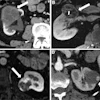
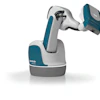
Dedicated breast CT shows promise as an adjunct to mammography -- with the added benefit of not requiring compression, according to research to be presented on Sunday afternoon.A team led by Elodia Cole of Beth Israel Deaconess Medical Center compared the clinical performance of the technology with that of 2D standard-view screening mammography and 2D diagnostic mammography to evaluate its role in diagnostic breast imaging.
The study included 235 cases, of which 52 were negative, 104 were benign, and 79 were malignant; all of the cases included screening mammography, diagnostic mammography, and dedicated breast CT images. Eighteen radiologists interpreted the cases over the course of three sessions: breast CT alone, breast CT plus screening mammography, and diagnostic mammography alone, tracking sensitivity, specificity, and area under the receiver operator characteristics (ROC) curve.
The combination of dedicated breast CT plus screening mammography had significantly higher sensitivity than diagnostic mammography and dedicated breast CT alone, Cole's group found.
These results suggest that the most effective use of dedicated breast CT for diagnostic imaging is as an adjunct to standard-view mammography, the researchers concluded.