Friday, December 5 | 11:30 a.m.-11:40 a.m. | SST09-07 | Room N226
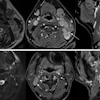
Researchers in the Netherlands are honing a new one-step stroke imaging protocol that promises to save dose and time, acquiring CT angiography (CTA) of the neck with head CT perfusion (CTP) during a single acquisition."One-step stroke imaging is a CTP acquisition in which one volumetric scan is substituted by volumetric neck CTA, using a toggling table technique and a single dose of contrast agent," Dr. Marcel Oei, from Radboud University in Nijmegen, told AuntMinnie.com.
It's not clear how missing a single time point during the CTP acquisition to obtain the neck CTA will affect the perfusion maps, nor is it clear which time point is best suited for neck CTA," Oei explained in an email. "We determined the optimum timing of neck CTA with the least effect on cerebral perfusion maps."
The study included 20 patients with suspected ischemic stroke who were scanned with a clinical CTP head protocol using a 320-detector-row CT scanner (Aquilion One, Toshiba Medical Systems).
Because neck CTA takes four seconds, omitting a single time point of CTP is sufficient to acquire the volume and simulate acquisition of a neck CTA, Oei and colleagues wrote in an abstract. One volumetric acquisition was deleted for each patient. The group calculated the corresponding perfusion maps and logged percentage errors for cerebral blood flow, cerebral blood volume, and mean transit time in the basal ganglia and white matter.
Percentage errors for all perfusion parameters were kept within 10% for all patients, and the researchers calculated the point of minimal error.
"We found that the perfusion values are not significantly different if the neck CTA is timed correctly, namely in the arterial upslope in the brain," Oei stated.
The second part of the research (not presented at RSNA) compares the image quality of the one-step protocol to that of conventional CTA. The results are excellent at the level of the bifurcation and skull base, but lag at the shoulder girdle level and need further optimization due to scatter artifacts.
"Despite these shortcomings, one-step stroke CT imaging can be an alternative for separate CTP and standard CTA, in particular for young patients and/or patients with impaired renal function, thereby saving radiation dose and contrast material," Oei said.