Thursday, December 4 | 9:35 a.m.-9:45 a.m. | VSVA51-06 | Room E352
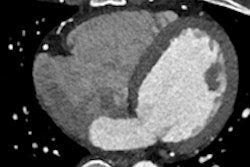
How much can dose be reduced in CT angiography (CTA) while preserving image quality in the latest dual-source CT (DSCT) scanners? Dr. Florian Schwarz and colleagues from the University of Munich looked at the image quality and radiation dose-saving potential of advanced dual-source CT.The sophisticated CT scan protocol included a third-generation detector (Somatom Force, Siemens Healthcare). The researchers examined integrated signal transformation, high-pitch acquisition, automatic kVp selection, and iterative reconstruction. Except for the detector, a similar protocol was used for the second-generation images (Somatom Flash, Siemens).
Dose and image quality, measured as signal-to-noise ratio and contrast-to-noise ratio, were examined in matched cohorts of 55 patients each on both scanner generations set to a range of tube potentials.
The results showed significantly decreased dose-length product and even slightly improved signal-to-noise ratio on the third-generation machine. The presentation will delve into the details.
"This study highlights the importance of a rapid and successful translation of the considerable engineering progress [in recent] years into radiation dose reduction and thus patient benefit," Schwarz told AuntMinnie.com.