Contrast media developer Mallinckrodt has introduced its OptiSync data management software in the U.S.
Used with Mallinckrodt's OptiVantage dual-head CT contrast delivery system, OptiSync is designed to assist with collecting and analyzing radiology data from contrast-enhanced CT imaging studies, according to the vendor.
OptiSync users can scan a barcode to verify and log patient and pharmaceutical information. Following collection of injection data, OptiSync then sends patient, drug, dose, and administration information to HL7-based healthcare systems and automates the process of updating patient records, Mallinckrodt said.
In addition, OptiSync can assemble a database with information on contrast media usage, spending, workflow, and benchmarking for all users, scanners, and facilities, Mallinckrodt said.



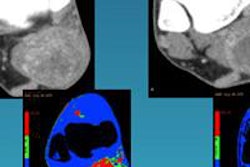


![Images show the pectoralis muscles of a healthy male individual who never smoked (age, 66 years; height, 178 cm; body mass index [BMI, calculated as weight in kilograms divided by height in meters squared], 28.4; number of cigarette pack-years, 0; forced expiratory volume in 1 second [FEV1], 97.6% predicted; FEV1: forced vital capacity [FVC] ratio, 0.71; pectoralis muscle area [PMA], 59.4 cm2; pectoralis muscle volume [PMV], 764 cm3) and a male individual with a smoking history and chronic obstructive pulmonary disorder (COPD) (age, 66 years; height, 178 cm; BMI, 27.5; number of cigarette pack-years, 43.2, FEV1, 48% predicted; FEV1:FVC, 0.56; PMA, 35 cm2; PMV, 480.8 cm3) from the Canadian Cohort Obstructive Lung Disease (i.e., CanCOLD) study. The CT image is shown in the axial plane. The PMV is automatically extracted using the developed deep learning model and overlayed onto the lungs for visual clarity.](https://img.auntminnie.com/mindful/smg/workspaces/default/uploads/2026/03/genkin.25LqljVF0y.jpg?auto=format%2Ccompress&crop=focalpoint&fit=crop&h=112&q=70&w=112)


