Teleradiology services provider NightHawk Radiology Services said it will be the exclusive radiology provider for the High-Risk Plaque (HRP) Initiative research effort.
As part of the research, NightHawk's U.S. radiologists will interpret chest CT scans for approximately 6,000 study participants, according to the Coeur D'Alene, ID-based firm. In addition, NightHawk said it expects its affiliated radiologists will read approximately 1,000 cardiac CT angiography scans performed on a subset of participants believed to be at higher risk for a cardiac event. Reading is expected to begin in the first quarter.
Related Reading
NightHawk posts preliminary 2007 results, January 29, 2008
Road to RSNA, Teleradiology Services, November 9, 2007
NightHawk profit slips as revenues boom, October 31, 2007
NightHawk posts Q2 gains, July 26, 2007
NightHawk acquires Midwest Physician Services, July 17, 2007
Copyright © 2008 AuntMinnie.com


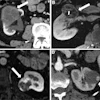



![Axial images from unenhanced calcium score cardiac CT (left) and curved planar reformation images from CT angiography (right) show that higher long-term exposure to air pollution is associated with greater coronary artery calcium and more obstructive coronary artery disease (CAD). Top row: Images in a 68-year-old male patient with higher 10-year mean ambient air pollution exposure (7.9 μg/m3 for particulate matter measuring ≤2.5 μm in diameter [PM2.5] and 17.4 parts per billion [ppb] for NO2) with extensive CAD (coronary artery calcium score [CACS] >1,000 and obstructive CAD [≥70% diameter stenosis]). Bottom row: Images in a 57-year-old female patient with lower 10-year mean ambient air pollution exposure (6.3 μg/m3 for PM2.5 and 4.6 ppb for NO2) with no CAD (CACS = 0 and no obstructive stenosis).](https://img.auntminnie.com/mindful/smg/workspaces/default/uploads/2026/06/hanneman.r6SMLzkezo.png?auto=format%2Ccompress&fit=crop&h=112&q=70&w=112)


