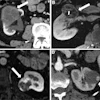
Treating stenotic uroenteric anastomoses with a cutting balloon catheter rather than traditional endoscopic surgery saves time and manpower during the procedure, according to a newly published French study.
Radiologists and urologists from the Hôpital Necker and the Collège Européen et Francophone d'Urologie Libérale, both in Paris, treated 32 patients with 37 stenoses between July 1994 and July 1997. The reasons for the urinary diversions included bladder cancer, uterine cervical carcinoma and neurogenic bladder. Nineteen patients underwent enterocystoplasty, and 13 had ileal conduit diversion (Radiology, Feb. 2000, Vol.214:2, pp.358-362).
A CT scan was obtained before the incision. A percutaneous nephrostomy tube was inserted with combined ultrasound and fluoroscopic guidance, and a nephrostogram obtained to assess the length of the stenosis; a hydrophicially coated guide wire was used to traverse the stenosis.
The cutting balloon device was a 5-F torque catheter with a monopolar electrocautery cutting wire and a low-pressure balloon attached that was inserted over the wire.
"Once the guide wire has been passed through the stenosis, the device is simple to use," the authors wrote. "Use of this device averts the difficulties inherent in flexible endoscopy, which is time-consuming, or obviates a second operator."
Total procedural time was less than an hour, and the postoperative stay did not exceed four hours. A minor complication included bleeding in one patient immediately after the incision, but it did not require transfusion. Follow-up after stent removal was done with excretory urography at one, three, six and 12 months, and then with a yearly control examination.
According to the final results, 32% of the stenoses, including two in patients with a totally obstructed ureter, recurred in nine patients. The remaining stenoses remained patent after an average of two years.
"These results are no worse than those of endoscopic surgery and were achieved with a simpler technique that has a low morbidity rate," the authors concluded.
By Shalmali PalAuntMinnie.com staff writer
February 18, 2000
Copyright © 2000 AuntMinnie.com