There is no association in postmenopausal women between wearing a bra and developing breast cancer, according to a new study published in Cancer Epidemiology, Biomarkers & Prevention.
Researchers from the University of Washington wanted to address speculation that wearing a bra could be the reason why breast cancer rates are higher in the developed world than in developing countries. Some lay media articles have hypothesized that bras could hamper the drainage of waste products around the breast, the researchers wrote.
The group studied 454 women with invasive ductal carcinoma and 590 women with invasive lobular carcinoma, the two most common types of breast cancer, in the Seattle-Puget Sound area. The control group consisted of 469 women who did not have breast cancer. All women were postmenopausal and between 55 and 74 years of age.
The researchers asked study participants various questions about demographics and family and reproductive history, as well as a series of structured questions on lifetime patterns of bra wearing, such as when a woman started wearing a bra, whether she wore a bra with an underwire, and the number of hours per day and per week she wore a bra.
No aspect of wearing a bra was associated with an increased risk for either type of cancer, the researchers noted.
"Given very limited biological evidence supporting ... a link between bra wearing and breast cancer risk, our results were not surprising," said lead author Lu Chen in a statement.
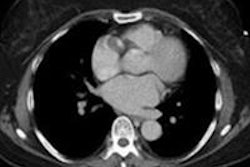
![Images show the pectoralis muscles of a healthy male individual who never smoked (age, 66 years; height, 178 cm; body mass index [BMI, calculated as weight in kilograms divided by height in meters squared], 28.4; number of cigarette pack-years, 0; forced expiratory volume in 1 second [FEV1], 97.6% predicted; FEV1: forced vital capacity [FVC] ratio, 0.71; pectoralis muscle area [PMA], 59.4 cm2; pectoralis muscle volume [PMV], 764 cm3) and a male individual with a smoking history and chronic obstructive pulmonary disorder (COPD) (age, 66 years; height, 178 cm; BMI, 27.5; number of cigarette pack-years, 43.2, FEV1, 48% predicted; FEV1:FVC, 0.56; PMA, 35 cm2; PMV, 480.8 cm3) from the Canadian Cohort Obstructive Lung Disease (i.e., CanCOLD) study. The CT image is shown in the axial plane. The PMV is automatically extracted using the developed deep learning model and overlayed onto the lungs for visual clarity.](https://img.auntminnie.com/mindful/smg/workspaces/default/uploads/2026/03/genkin.25LqljVF0y.jpg?auto=format%2Ccompress&crop=focalpoint&fit=crop&h=100&q=70&w=100)


![Images show the pectoralis muscles of a healthy male individual who never smoked (age, 66 years; height, 178 cm; body mass index [BMI, calculated as weight in kilograms divided by height in meters squared], 28.4; number of cigarette pack-years, 0; forced expiratory volume in 1 second [FEV1], 97.6% predicted; FEV1: forced vital capacity [FVC] ratio, 0.71; pectoralis muscle area [PMA], 59.4 cm2; pectoralis muscle volume [PMV], 764 cm3) and a male individual with a smoking history and chronic obstructive pulmonary disorder (COPD) (age, 66 years; height, 178 cm; BMI, 27.5; number of cigarette pack-years, 43.2, FEV1, 48% predicted; FEV1:FVC, 0.56; PMA, 35 cm2; PMV, 480.8 cm3) from the Canadian Cohort Obstructive Lung Disease (i.e., CanCOLD) study. The CT image is shown in the axial plane. The PMV is automatically extracted using the developed deep learning model and overlayed onto the lungs for visual clarity.](https://img.auntminnie.com/mindful/smg/workspaces/default/uploads/2026/03/genkin.25LqljVF0y.jpg?auto=format%2Ccompress&crop=focalpoint&fit=crop&h=112&q=70&w=112)