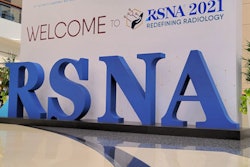
The RSNA plans to host an imaging access program that it said aims to improve "health equity, access, safety and patient care in South, Central and North America."
The program, called "Building Connections Across the Americas: Addressing Access to Radiology," is funded by the U.S. Department of Energy's National Security Administration. The program consists of three events that are being held during 2023. Collaborators will include radiologists, physicists, diplomats, educators, hospital administrators, and industry personnel, the RSNA said.
The first event will focus on the topic "radiology care for all," while the second will focus on education, safety, and innovation. The third event will focus on global health equity, according to the society.
In other RSNA news, the society announced the results of the RSNA Cervical Spine Fracture AI Challenge, which it conducted in partnership with the American Society of Neuroradiology and the American Society of Spine Radiology. The challenge was intended to investigate the use of artificial intelligence (AI) for detecting and localizing cervical spine injuries.
Eight teams developed machine-learning models that matched radiologist performance for this indication. The top teams included the following:
- Qishen Ha
- RAWE
- Darragh
- Selim Seferbekov
- Speedrun
- Skecherz
- Qwer
- Harshit Sheoran
The teams will be recognized on November 28 at the upcoming RSNA meeting in the AI Showcase.