South Korean artificial intelligence (AI) developer Vuno has received class II approval for its Vuno Med Chest X-ray algorithm for identifying abnormal findings on chest x-rays.
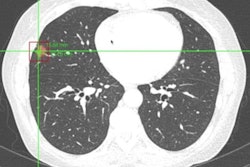
The algorithm was trained to find nodules, pneumothorax, effusions, and interstitial opacities that are commonly seen on chest x-ray images. The algorithm classifies lesions as normal or abnormal and highlights suspected abnormal regions.
Results from clinical trials of the algorithm indicate it reduced the average reading time of medical staff by 50% while improving lesion detection performance by 5.8%. Sensitivity, specificity, and accuracy were all improved with Vuno Med Chest X-ray, and the probability of false positives in normal areas was reduced by 50%.
Vuno is also developing algorithms for bone age and brain analysis.








![A normal mammogram confirmed by three-year radiologic follow-up illustrates reader-marked regions of interest (ROIs) during (A) unaided (round 1) and (B) artificial intelligence (AI)–assisted (round 2) reading. Each colored dot represents an ROI for recall by a human reader. Readers could mark more than one ROI per case, represented by multiple dots of the same color. During AI-assisted reading, the AI system displayed three visible prompts: two with suspicion of malignancy scores of 35% (left mediolateral oblique [L MLO] and craniocaudal [L CC]) and one with a suspicion of malignancy score of 10% (right craniocaudal [R CC]), shown as polygonal overlays. Without AI, six of 10 readers (60%) marked a false-positive ROI. With AI assistance, this fell to two of 10 (20%). R MLO = right mediolateral oblique.](https://img.auntminnie.com/mindful/smg/workspaces/default/uploads/2026/07/2026-07-14-radiology-mammogram-ai-auto-bias.H0bYO8QlWs.jpg?auto=format%2Ccompress&fit=crop&h=112&q=70&w=112)


