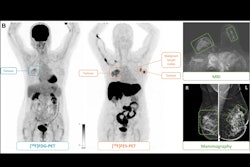
F-18 FES-PET/CT imaging is clinically useful for guiding second-line therapy decisions in patients with metastatic breast cancer, changing treatment plans in nearly 38% of cases and significantly increasing oncologist confidence in treatment selection.
- FES-PET/CT altered therapeutic management in 37.8% of patients with metastatic breast cancer progressing on first-line endocrine therapy
- Oncologist confidence in treatment decisions increased from 6.6 to 8.6 on a 10-point scale after imaging results
- In over 50% of patients, FES-PET/CT results reduced the need for additional diagnostic tests and biopsies
- F-18 FES (Cerianna) was FDA-approved in 2020 for detecting estrogen receptor-positive lesions in breast cancer
- Study included 45 women across 17 U.S. centers between January 2023 and May 2024
F-18 fluoroestradiol (FES) PET/CT is clinically useful for guiding second-line therapy decisions in patients with metastatic breast cancer, according to a study published September 18 in Clinical Breast Cancer.
The finding is from a multi-center phase IV prospective clinical trial in women with estrogen receptor (ER)-positive, HER2-negative tumors and suggests the technique could help oncologists select more effective treatment strategies if hormone therapy isn’t working, noted lead author Hannah Linden, MD, of the University of Washington in Seattle, and colleagues.
“F-18 FES-PET/CT altered therapeutic management in 37.8% of patients with [metastatic breast cancer] progressing on first line endocrine therapy and significantly increased oncologist’s confidence in treatment selection,” the group wrote.
Many patients with ER-positive, HER2-negative metastatic tumors derive limited benefit from second line endocrine therapy, the researchers noted. F-18 FES (Cerianna, GE HealthCare) is a PET radiotracer approved by the U.S. Food and Drug Administration (FDA) in 2020 for detecting ER-positive lesions as an adjunct to biopsy, yet evidence is limited on its impact on second-line therapeutic decision-making.
To bridge the gap, the researchers recruited 45 women with metastatic breast cancer progressing on first-line endocrine therapy at 17 U.S. centers between January 2023 and May 2024. The primary endpoint was the proportion of patients whose therapeutic management changed following FES-PET/CT. Treating oncologists also rated their confidence in the treatment decision on a 10-point scale before and after imaging.
According to the findings, FES-PET/CT results led to therapeutic management changes in 17 patients (37.8%). In addition, in more than 50% of patients (n = 25), scan results were used to reduce additional diagnostic tests and procedures, primarily biopsies, while in approximately 15% of patients (n = 7), F-18 FES PET/CT findings prompted additional testing.
Oncologist’s confidence in second line treatment decision increased on average from 6.6 before F-18 FES-PET/CT to 8.6 afterward on a ten-point scale (p <0.0001), the researchers reported.
“These results demonstrate the utility of F-18 FES-PET/CT in therapeutic decision making in a real-world clinical setting,” the group wrote.
Ultimately, while findings showed that F-18 FES-PET/CT results were useful to treating oncologists to guide clinical decision making, the study was not designed to assess a benefit in patient outcome after a therapeutic management change, the researchers noted.
“Potential outcome benefits after F-18 FES-PET/CT informed therapeutic management changes will be evaluated in further studies, e.g., the ECLECTIC study (NCT06195709),” the group concluded.
The full study is available here.