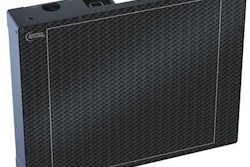
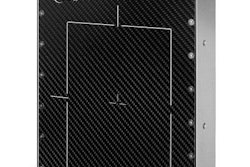
Detection Technology has launched its new Aurora digital x-ray detector product line.
The standalone detectors are designed to mitigate noise from different sources, such as electromagnetic interferences caused by conveyor motors, power supply, x-ray tube high voltage, and radiofrequency disturbances. The design also reduces leakage currents due to humidity, as well as dirt or other contaminants in pins and sockets, according to the company.
The plug-and-play configuration of the detectors is intended to reduce costs for OEMs and system integrators, Detection Technology said.







![Representative example of a 16-year-old male patient with underlying X-linked adrenoleukodystrophy. (A, B) Paired anteroposterior (AP) chest radiograph and dual-energy x-ray absorptiometry (DXA) report shows lumbar spine (L1 through L4) areal bone mineral density (BMD). The DXA report was reformatted for anonymization and improved readability. The patient had low BMD (Z score ≤ −2.0). (C) Model (chest radiography [CXR]–BMD) output shows the predicted raw BMD and Z score in comparison with the DXA reference standard, together with interpretability analyses using Shapley additive explanations (SHAP) and gradient-weighted class activation maps. The patient was classified as having low BMD, consistent with the reference standard. AM = age-matched, DEXA = dual-energy x-ray absorptiometry, RM2 = room 2, SNUH = Seoul National University Hospital, YA = young adult.](https://img.auntminnie.com/mindful/smg/workspaces/default/uploads/2026/04/ai-children-bone-density.0snnf2EJjr.jpg?auto=format%2Ccompress&fit=crop&h=112&q=70&w=112)


