Wednesday, November 28 | 11:20 a.m.-11:30 a.m. | SSK03-06 | Room S404CD
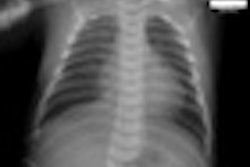
The incorporation of wireless digital radiography (DR) detectors into portable x-ray systems has brought major workflow advantages to radiology departments compared to computed radiography (CR). But does wireless portable DR also have an image quality advantage?Researchers from Massachusetts General Hospital sought to answer that question by comparing image quality in two portable units, one outfitted with a wireless DR panel (DRX, Carestream Health) and the other with CR (Agfa HealthCare).
They started with a dataset of 75 pairs of wireless DR and CR images, acquired in the same patient within 24 hours of each other. Seven board-certified radiologists used a five-point scale to grade image quality, visibility of anatomic landmarks, clinically significant findings, and the visualization of tubes and lines.
Most of the radiologists found the wireless DR images to be better or clearly better than CR for visibility of tubes and lines, and edge-enhanced DR images were particularly useful for evaluating central lines and esophageal tubes. Some radiologists (three of the seven) found wireless DR significantly better for visibility of the carina and tracheal deviation.
However, most radiologists found that there was no significant difference between wireless DR and CR in image quality and visualization of clinically significant findings.
The researchers concluded that wireless DR at least maintains the image quality of CR for clinically significant findings, while exceeding CR for some clinical tasks, an important consideration given wireless DR's workflow advantages in the portable environment.