The U.S. Food and Drug Administration (FDA) has granted clearance for U.K. AI software developer Brainomix's 360 e-Lung image processing algorithm.
Entry into the lung imaging space expands the company's footprint in medical imaging beyond its stroke-related applications. Brainomix said that it is developing novel lung imaging biomarkers, such as its weighted reticulovascular score to stratify patients at risk of idiopathic pulmonary fibrosis progression.
e-Lung consists of thousands of CT scans from academic institutions, according to the company.
Brainomix plans to present its latest e-Lung data at the American Thoracic Society (ATS) annual conference, which starts today in San Diego.

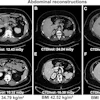






![Images show the pectoralis muscles of a healthy male individual who never smoked (age, 66 years; height, 178 cm; body mass index [BMI, calculated as weight in kilograms divided by height in meters squared], 28.4; number of cigarette pack-years, 0; forced expiratory volume in 1 second [FEV1], 97.6% predicted; FEV1: forced vital capacity [FVC] ratio, 0.71; pectoralis muscle area [PMA], 59.4 cm2; pectoralis muscle volume [PMV], 764 cm3) and a male individual with a smoking history and chronic obstructive pulmonary disorder (COPD) (age, 66 years; height, 178 cm; BMI, 27.5; number of cigarette pack-years, 43.2, FEV1, 48% predicted; FEV1:FVC, 0.56; PMA, 35 cm2; PMV, 480.8 cm3) from the Canadian Cohort Obstructive Lung Disease (i.e., CanCOLD) study. The CT image is shown in the axial plane. The PMV is automatically extracted using the developed deep learning model and overlayed onto the lungs for visual clarity.](https://img.auntminnie.com/mindful/smg/workspaces/default/uploads/2026/03/genkin.25LqljVF0y.jpg?auto=format%2Ccompress&crop=focalpoint&fit=crop&h=112&q=70&w=112)


