All day | CA136-ED-X | Digital education exhibit
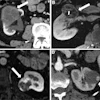
This digital education exhibit will provide background on cinematic rendering, distinguishing it from traditional 3D volume rendering, and detail its potential role in cardiovascular radiology.Drawn from the computer animation techniques made famous by Hollywood, cinematic rendering is a new approach to the 3D visualization of medical images from CT scans.
Cinematic rendering may be the next best way to improve the 3D visualization of CT scans because it takes into account complex light paths that 3D volume-rendering algorithms ignore, Dr. Harold Litt, PhD, from the University of Pennsylvania told AuntMinnie.com.
"[Cinematic rendering] simulates light transport along thousands of photon paths per pixel, which gives a more realistic representation of human anatomy," he said.
In this exhibit, Litt and colleagues will explain how to customize parameters to use cinematic rendering for the 3D visualization of CT scans and also present several cardiology case examples using the image reconstruction technique to identify features of interest.
Physicians can use cinematic rendering to improve the identification of pathologies, enhance surgical planning, help patients understand their condition, and train new medical practitioners, Litt said.
"In addition, it is believed that cinematic rendering will increase and improve interdisciplinary communication among caregivers," he said.