Sunday, November 29 | 12:30 p.m.-1:00 p.m. | IN205-SD-SUA6 | Lakeside Learning Center, Station 6
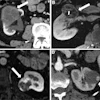
Researchers from Yale University will show in their poster presentation how retaining raw CT data may enable radiologists to reduce the number of unnecessary repeat CT scans being performed on patients.The research project stemmed from a suspicion that their institution was performing a small percentage of unnecessary CT scans on patients to evaluate anatomic regions that had already been imaged with CT for a different indication. Although raw CT data have not typically been kept after images are acquired and stored, the information could still -- in appropriate clinical scenarios -- be repurposed to reformat a different exam at a future time point, according to co-author Dr. William Zucconi.
Zucconi and first author Dr. Felix Nautsch hypothesized that continued storage of raw CT data would not be cost-prohibitive and would spare patients unnecessary radiation and decrease healthcare spending.
"Furthermore, a decision-support tool would incorporate a feature alerting the referring clinician that a CT of the relevant anatomy was performed recently and could be used to generate a diagnostic exam for a new area of interest," Zucconi told AuntMinnie.com.
An initial review of randomly sampled CT exams suggested that up to 1.9% of scans could be avoided, Zucconi said.
"Since the abstract was accepted for RSNA this year, we've expanded our analysis and will have an updated, more powerful result to present at the meeting, and we hope to one day implement this prospectively at our institution," he said. "For now, the key takeaway point is simply that the decreasing costs of redundant, HIPAA-compliant, raw CT data storage in certain situations may save our patients money and radiation without compromising their care."
To hear the rest of the Yale team's findings, drop by this poster presentation early Sunday afternoon.