Sunday, November 29 | 11:35 a.m.-11:45 a.m. | SSA02-06 | Room S502AB
Can spectral CT determine the type of coronary plaque and even its vulnerability to rupture? It can, according to researchers in China.A group from the First Affiliated Hospital of Soochow University in Suzhou was looking for new ways to evaluate coronary plaque characteristics and decided to try spectral CT. Conventional CT is already adept at characterizing plaque morphology, location, and degree of luminal stenosis.
The researchers examined the coronary artery plaques of more than 100 patients at coronary CT angiography using a spectral imaging-capable 64-detector-row scanner, dividing them based on conventional CT characterizations such as Hounsfield units and calcification volumes. They probed plaque vulnerability by serum biomarkers; two biomarkers were found to correlate with atherosclerosis, and the presence of one was likely evidence of plaque vulnerability, Dr. Li Yonggang reported.
The scanner offers a variety of quantitative analysis methods, but its multiparameter imaging mode, in particular, "took the CT diagnosis from morphology into the functional area, and provided a reliable basis for early detection and accurate diagnosis of disease," Yonggang told AuntMinnie.com.


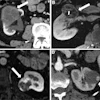
![Images show the pectoralis muscles of a healthy male individual who never smoked (age, 66 years; height, 178 cm; body mass index [BMI, calculated as weight in kilograms divided by height in meters squared], 28.4; number of cigarette pack-years, 0; forced expiratory volume in 1 second [FEV1], 97.6% predicted; FEV1: forced vital capacity [FVC] ratio, 0.71; pectoralis muscle area [PMA], 59.4 cm2; pectoralis muscle volume [PMV], 764 cm3) and a male individual with a smoking history and chronic obstructive pulmonary disorder (COPD) (age, 66 years; height, 178 cm; BMI, 27.5; number of cigarette pack-years, 43.2, FEV1, 48% predicted; FEV1:FVC, 0.56; PMA, 35 cm2; PMV, 480.8 cm3) from the Canadian Cohort Obstructive Lung Disease (i.e., CanCOLD) study. The CT image is shown in the axial plane. The PMV is automatically extracted using the developed deep learning model and overlayed onto the lungs for visual clarity.](https://img.auntminnie.com/mindful/smg/workspaces/default/uploads/2026/03/genkin.25LqljVF0y.jpg?auto=format%2Ccompress&crop=focalpoint&fit=crop&h=100&q=70&w=100)


![Images show the pectoralis muscles of a healthy male individual who never smoked (age, 66 years; height, 178 cm; body mass index [BMI, calculated as weight in kilograms divided by height in meters squared], 28.4; number of cigarette pack-years, 0; forced expiratory volume in 1 second [FEV1], 97.6% predicted; FEV1: forced vital capacity [FVC] ratio, 0.71; pectoralis muscle area [PMA], 59.4 cm2; pectoralis muscle volume [PMV], 764 cm3) and a male individual with a smoking history and chronic obstructive pulmonary disorder (COPD) (age, 66 years; height, 178 cm; BMI, 27.5; number of cigarette pack-years, 43.2, FEV1, 48% predicted; FEV1:FVC, 0.56; PMA, 35 cm2; PMV, 480.8 cm3) from the Canadian Cohort Obstructive Lung Disease (i.e., CanCOLD) study. The CT image is shown in the axial plane. The PMV is automatically extracted using the developed deep learning model and overlayed onto the lungs for visual clarity.](https://img.auntminnie.com/mindful/smg/workspaces/default/uploads/2026/03/genkin.25LqljVF0y.jpg?auto=format%2Ccompress&crop=focalpoint&fit=crop&h=112&q=70&w=112)