Royal Philips told investors this week that delays in restarting production at its Philips Healthcare division's CT manufacturing facility in Cleveland will result in lower than expected fourth-quarter earnings, according to a report in the Wall Street Journal.
Philips had suspended production at the facility last year after the U.S. Food and Drug Administration (FDA) questioned manufacturing controls. Issues with restarting production will also hurt 2014 earnings by an expected 225 million euros ($266 million U.S.), up from a previous estimate of 180 million euros ($216 million), according to the Wall Street Journal.
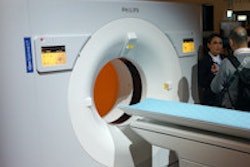
In good news, Philips has again begun shipping its Brilliance iCT product from the Cleveland facility after its quality-management system received external certification, according to the article.






![Axial images from unenhanced calcium score cardiac CT (left) and curved planar reformation images from CT angiography (right) show that higher long-term exposure to air pollution is associated with greater coronary artery calcium and more obstructive coronary artery disease (CAD). Top row: Images in a 68-year-old male patient with higher 10-year mean ambient air pollution exposure (7.9 μg/m3 for particulate matter measuring ≤2.5 μm in diameter [PM2.5] and 17.4 parts per billion [ppb] for NO2) with extensive CAD (coronary artery calcium score [CACS] >1,000 and obstructive CAD [≥70% diameter stenosis]). Bottom row: Images in a 57-year-old female patient with lower 10-year mean ambient air pollution exposure (6.3 μg/m3 for PM2.5 and 4.6 ppb for NO2) with no CAD (CACS = 0 and no obstructive stenosis).](https://img.auntminnie.com/mindful/smg/workspaces/default/uploads/2026/06/hanneman.r6SMLzkezo.png?auto=format%2Ccompress&fit=crop&h=112&q=70&w=112)


