Sunday, November 28 | 11:05 a.m.-11:15 a.m. | SSA19-03 | Room S403B
In this scientific session, a team from Osaka University Medical School in Japan will present data detailing the benefits of adaptive statistical iterative reconstruction (ASIR) technology for computer-aided detection (CAD) of lung nodules.ASIR has been shown to be a valuable processing method for improving image quality and reducing CT radiation dose. The Osaka University researchers hypothesized that it would also improve the performance of CAD for identifying lung nodules on images acquired on a CT scanner with garnet-based detectors, said presenter Masahiro Yanagawa, MD.
To test their theory, the researchers studied 35 patients who had received chest CT scans acquired with both standard and low-dose protocols. ASIR was used to reconstruct each 0.625-mm-thick image at three different levels.
Lung VCAR software (GE Healthcare, Chalfont St. Giles, U.K.) was then applied, and its results were retrospectively compared with the reference standard. CAD's overall sensitivity for lung nodules increased significantly for both standard and low-dose images after using ASIR, although it came at the expense of increased false positives.
"The ASIR technique has the potential to improve the performance of CAD even using low-dose CT," Yanagawa told AuntMinnie.com.


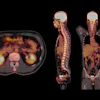


![Images show the pectoralis muscles of a healthy male individual who never smoked (age, 66 years; height, 178 cm; body mass index [BMI, calculated as weight in kilograms divided by height in meters squared], 28.4; number of cigarette pack-years, 0; forced expiratory volume in 1 second [FEV1], 97.6% predicted; FEV1: forced vital capacity [FVC] ratio, 0.71; pectoralis muscle area [PMA], 59.4 cm2; pectoralis muscle volume [PMV], 764 cm3) and a male individual with a smoking history and chronic obstructive pulmonary disorder (COPD) (age, 66 years; height, 178 cm; BMI, 27.5; number of cigarette pack-years, 43.2, FEV1, 48% predicted; FEV1:FVC, 0.56; PMA, 35 cm2; PMV, 480.8 cm3) from the Canadian Cohort Obstructive Lung Disease (i.e., CanCOLD) study. The CT image is shown in the axial plane. The PMV is automatically extracted using the developed deep learning model and overlayed onto the lungs for visual clarity.](https://img.auntminnie.com/mindful/smg/workspaces/default/uploads/2026/03/genkin.25LqljVF0y.jpg?auto=format%2Ccompress&crop=focalpoint&fit=crop&h=100&q=70&w=100)


![Images show the pectoralis muscles of a healthy male individual who never smoked (age, 66 years; height, 178 cm; body mass index [BMI, calculated as weight in kilograms divided by height in meters squared], 28.4; number of cigarette pack-years, 0; forced expiratory volume in 1 second [FEV1], 97.6% predicted; FEV1: forced vital capacity [FVC] ratio, 0.71; pectoralis muscle area [PMA], 59.4 cm2; pectoralis muscle volume [PMV], 764 cm3) and a male individual with a smoking history and chronic obstructive pulmonary disorder (COPD) (age, 66 years; height, 178 cm; BMI, 27.5; number of cigarette pack-years, 43.2, FEV1, 48% predicted; FEV1:FVC, 0.56; PMA, 35 cm2; PMV, 480.8 cm3) from the Canadian Cohort Obstructive Lung Disease (i.e., CanCOLD) study. The CT image is shown in the axial plane. The PMV is automatically extracted using the developed deep learning model and overlayed onto the lungs for visual clarity.](https://img.auntminnie.com/mindful/smg/workspaces/default/uploads/2026/03/genkin.25LqljVF0y.jpg?auto=format%2Ccompress&crop=focalpoint&fit=crop&h=112&q=70&w=112)