Dear CT Insider,
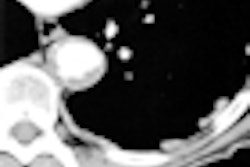
CT news doesn't get much bigger than today's statement from the U.S. National Cancer Institute that screening cuts lung cancer deaths by more than 20%.
Early results of the National Lung Screening Trial (NLST) -- controversial from the start because it included an x-ray arm -- show that far fewer smokers and former smokers died in the five years following CT screening compared to individuals randomized to radiography.
The results will come as no surprise to screening advocates, but NLST's large size and randomized design offer much-needed clarity for government and the healthcare community, while potentially spurring the development of tools such as computer-aided detection that will make CT screening more efficient and cost-effective.
In other news in your CT Digital Community, CT is becoming ridiculously popular for head and neck scans even without the benefit of a randomized trial, say researchers from Thomas Jefferson University in Philadelphia.
Driven by increased screening at every level, Medicare data show head and neck CT rose more than 800% between 2002 and 2007. And according to the authors, there's no indication that utilization has begun to level off along with other types of CT scans. You'll find the rest of the results in our CT Insider Exclusive.
On the other hand, radiologists in Cincinnati were able to reduce head CT use in a younger population by instituting a simple rule change.
Meanwhile, in Africa, where millions lack access to even the most basic healthcare, CT could finally be on the horizon. In partnership with a French nonprofit organization, a new industry initiative aims to install at least 36 scanners in 13 African countries that have vast unmet healthcare needs. The low-cost one- and two-slice CT scanners will come complete with extended service warranties, and the personnel using them will benefit from an online education network that spans two continents. Learn more by clicking here.
In another bit of good news, easy-to-see calcifications and other findings of the thoracic aorta were harbingers of cardiac events, say researchers from University Medical Center Utrecht in the Netherlands. And there's more. Be sure to scroll down for the rest of the news in radiology's most important modality.