Dear AuntMinnie Member,
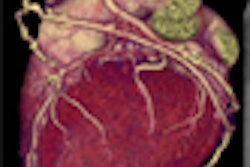
Radiation dose is the elephant in the room of any conversation about cardiac imaging with 64-slice CT scanners. Everyone knows it's there, but few want to talk about it.
That could be about to change thanks to new techniques that are being developed to reduce radiation dose while preserving image quality. One such technique is the subject of an article by staff writer Eric Barnes that we're featuring this week in our CT Digital Community.
Called step-and-shoot imaging, the technique uses prospective gating to move the CT table in increments based on the optimal phase of the cardiac cycle to collect images. The goal is to reduce exposure of the anatomy to overlapping passes of the x-ray beam.
Researchers from Virginia report that step-and-shoot imaging reduces radiation dose by up to 83%. What's more, they observed better image quality with the technique compared to traditional cardiac CT angiography based on retrospective gating.
See for yourself by clicking here, or visit our CT Digital Community, available at ct.auntminnie.com.

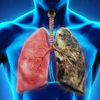
![Axial images from unenhanced calcium score cardiac CT (left) and curved planar reformation images from CT angiography (right) show that higher long-term exposure to air pollution is associated with greater coronary artery calcium and more obstructive coronary artery disease (CAD). Top row: Images in a 68-year-old male patient with higher 10-year mean ambient air pollution exposure (7.9 μg/m3 for particulate matter measuring ≤2.5 μm in diameter [PM2.5] and 17.4 parts per billion [ppb] for NO2) with extensive CAD (coronary artery calcium score [CACS] >1,000 and obstructive CAD [≥70% diameter stenosis]). Bottom row: Images in a 57-year-old female patient with lower 10-year mean ambient air pollution exposure (6.3 μg/m3 for PM2.5 and 4.6 ppb for NO2) with no CAD (CACS = 0 and no obstructive stenosis).](https://img.auntminnie.com/mindful/smg/workspaces/default/uploads/2026/06/hanneman.r6SMLzkezo.png?auto=format%2Ccompress&fit=crop&h=100&q=70&w=100)


![Axial images from unenhanced calcium score cardiac CT (left) and curved planar reformation images from CT angiography (right) show that higher long-term exposure to air pollution is associated with greater coronary artery calcium and more obstructive coronary artery disease (CAD). Top row: Images in a 68-year-old male patient with higher 10-year mean ambient air pollution exposure (7.9 μg/m3 for particulate matter measuring ≤2.5 μm in diameter [PM2.5] and 17.4 parts per billion [ppb] for NO2) with extensive CAD (coronary artery calcium score [CACS] >1,000 and obstructive CAD [≥70% diameter stenosis]). Bottom row: Images in a 57-year-old female patient with lower 10-year mean ambient air pollution exposure (6.3 μg/m3 for PM2.5 and 4.6 ppb for NO2) with no CAD (CACS = 0 and no obstructive stenosis).](https://img.auntminnie.com/mindful/smg/workspaces/default/uploads/2026/06/hanneman.r6SMLzkezo.png?auto=format%2Ccompress&fit=crop&h=112&q=70&w=112)