CHICAGO - Epiphyseal injuries occur at the epiphyseal plate, or growth plate, of children and adolescents, commonly near the major joints of the limbs. These injuries generally occur as a result of degenerative conditions and fractures of the epiphysis.
In the case of fractures, x-ray is the primary means of evaluating epiphyseal injuries. Investigators from Germany sought to determine if MRI could accurately make the diagnosis and supplant x-ray.
"The involvement of the growth plates is noticed in 6% to 15% of all fractures of the tubular bones in childhood," wrote Dr. Hubert Gufler and colleagues in a poster presentation this week at the RSNA meeting. Gufler is from Giessen University in Giessen, Germany. His colleagues are from Rostock University in Rostock, Germany.
"If physeal injuries are not detected and treated adequately, growth retardation, growth arrest, deformity, and impairment of (function) may result," they stated.
Gufler and colleagues conducted a prospective study of 24 children (mean age 10.8 years) who underwent MRI within a week after trauma. Epiphyseal injuries were suspected but the radiographs were equivocal, the group stated. Imaging was done on a 1-tesla unit with dedicated extremity coils. The MR protocol included T1- and T2-weighted imaging with TSE images obtained in the coronal and sagittal planes.
The researchers used the Salter-Harris system to classify fractures on plain-film and MRI. The latter were checked for fractures, joint effusion, bone bruise, periosteal alterations, and soft-tissue injuries.
According to the results, 23 patients (one patient had poor MR image quality) showed mild to conspicuous joint effusions. Fifteen out of the 23 had a fracture ruled out by MRI. Eleven of these 15 showed a marked bone bruise. In seven patients, the MR exam confirmed epiphyseal fractures. In one case, the fracture was initially missed but was clearly seen on MRI.
Among those with fractures, there were eight cases of bone marrow edema, eight of periosteal changes, and eight with joint effusion. Among those without fractures, there were nine cases of bone marrow edema, three of periosteal changes, and all 15 had joint effusion.
"Bone marrow edema was seen best on T2*-weighted (gradient-echo) sequence with fat suppression, followed by T2-weighted TSE sequence with fat suppression," the authors stated.
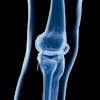
They offered an example of an x-ray of the knee with an incomplete, oblique-oriented fracture line of the metaphysis on lateral views. The T2-weighted fat-suppressed MRI confirmed a clear fracture of the head of the tibia. There was also a slight widening of the physis, marked soft-tissue edema, and hemorrhage. The fracture line was still detectable eight months later.
The group concluded that MRI was useful as an adjunct imaging tool but that it could not replace x-ray for these complex injuries.
Previous researchers have reported similar results with MRI in physeal injuries. Nearly a decade ago, French radiologists stated that gradient-echo MRI should be limited to complex fractures and cases in which evaluation on x-ray was uncertain (American Journal of Roentgenology, May 1996, Vol. 166:5, pp. 1203-1206).
More recently, a group from the University of Michigan Health System in Ann Arbor found that the confirmation of fracture by MR changed clinical management in their patient population by improving delineation of nondisplaced physeal fractures while allowing for evaluation of soft-tissue structures. However, they stated that "physeal fractures of the pediatric knee are occasionally diagnosed by MR" (Pediatric Radiology, October 2000, Vol. 30:11, pp. 756-762).
By Shalmali Pal
AuntMinnie.com staff writer
December 1, 2005
Related Reading
Flat-panel detectors cut radiation dose in angiography, pediatric chest x-rays, November 4, 2005
Pediatric ankle exam predicts need for x-rays, November 1, 2002
Copyright © 2005 AuntMinnie.com